Sunil Bharala, the chairman of the state Labour Welfare Council, said stubble burning is an 'age-old practice'.
Air pollution may lead to a faster spread of Covid-19 infection as it causes coughing and sneezing, government officials told a parliamentary panel on Friday, according to sources.

The Centre directed Uttar Pradesh and Bihar on Sunday to prevent dumping of dead bodies in the Ganga and its tributaries, and focus on their safe disposal and a dignified cremation after corpses were seen floating in these rivers following a spurt in the number of coronavirus cases.

According to Central Pollution Control Board's (CPCB) Sameer app, the city's air quality index (AQI) stood at 449 in the severe category at 8 am on Saturday. It was 462 on Friday.
Violation of the provisions entails a punishment of a jail term up to five years or with fine up to Rs 1 crore or with both, the ordinance released by the Ministry of Law and Justice on Thursday said.
The issue of pollution caused due to the non-degradable material is keeping consumer goods majors - from ITC and Dabur to Nestl and PepsiCo - on their toes.

Earth just cannot support seven billion human beings! Find out how you can use science, social awareness and data analytics to come up with sustainable solutions.
The sustainable impact of this process is under scrutiny, Tripathi added.

This has been our history of good governance: Things that were difficult to do and required planning and implementation were first taken up and then abandoned, notes Aaakr Patel.

'If you want to force the press into blacking out the Opposition's views or colour the news to your own liking, we will not do so.' 'We stand by freedom of expression. It is our Constitutional right. We stand by our Constitutional right.'
The overall AQI deteriorated further and touched the 268 mark, which falls in the poor category.

'If a common man wants to buy an air purifier for Rs 10,000, then he will have to shell out Rs 11,800 with 18 percent GST.' 'If he is charged GST at 5 percent the same air purifier will cost Rs 10,500.' 'This saves a one time amount of Rs 1,300 -- and that too just to breathe clean air.'
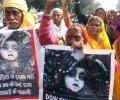
The work to remove 377 metric tonnes of hazardous waste from the now-defunct Union Carbide factory in Bhopal has begun. The waste will be transported to an incineration site in Pithampur near Indore, around 250 km from Bhopal. The move comes after the Madhya Pradesh High Court ordered the authorities to clear the site, 40 years after the deadly gas leak that killed thousands and left hundreds of thousands with health problems.

The Supreme Court has permitted the sale and bursting of green crackers in Delhi-NCR for Diwali, relaxing the ban on green firecrackers as a temporary measure from October 18 to 21. The court has asked pollution control boards to monitor pollution levels and file reports. The order also includes measures to prevent the sale of non-compliant crackers.

Delhi will become the first such city in India to have such a scheme and the only one after Beijing in Asia.

A severe cold wave has intensified across North India, with Delhi recording its lowest temperature of the season. Rajasthan experienced sub-zero temperatures, and several states have issued alerts and closed schools due to the extreme conditions.

According to the Graded Response Action Plan (GRAP), the air quality is considered to be in the emergency category if the PM2.5 and PM10 levels continue to be above 300 micrograms per cubic metre and 500 micrograms per cubic metre respectively for 48 hours or more.
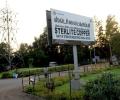
Vedanta had sought handing over of the plant for three months saying it requires two months to start the unit and the company should be allowed to run it for four weeks to ascertain whether its polluting or not. The interim plea by Vedanta was opposed by Tamil Nadu government which claimed before a bench headed by Justice R F Nariman that the plant had been 'polluting consistently'.
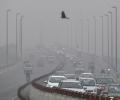
With Delhi recording air pollution levels seven to eight times above safe standards on Monday, the city government announced the return of its flagship odd-even scheme after four years anticipating further deterioration of air quality post-Diwali.

A bench of the NGT, headed by its chairperson Justice Adarsh Kumar Goel, directed that the order will also apply to all cities and towns in the country where the average of ambient air quality during November (as per available data of last year) falls under 'poor' or worse category.
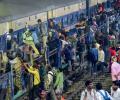
Among heavy criticism of West Bengal Chief Minister Mamata Banerjee's remarks on Prayagraj's Mahakumbh, Jagadguru Shankaracharya Swami Avimukteshwaranand Saraswati Maharaj on Wednesday supported the CM, saying that the religious event has been mismanaged.

Violation of the provisions entails a punishment of a jail term of up to five years or with fine up to Rs one crore or with both.

The pollution board said that the situation will improve further by Sunday if favourable conditions prevail.

Report by Greenpeace also presented a grim picture of India's pollution level.

The national capital on Friday recorded a 24-hour average air quality index of 239. On Thursday, it was 315, the worst since February 12 when the AQI was 320.

The Congress on Friday claimed that a 'silent undercurrent' is brewing across western Uttar Pradesh against the 'failures' of the Modi government, as it flagged issues such as 'neglect' of sugarcane farmers and examination paper leaks.

Air quality index (AQI) soared past 350 level in parts of Delhi on Thursday and experts cautioned that as weather turns colder it may breach the 400-mark ceiling and enter the 'severe' zone soon, notwithstanding the incidents of stubble burnings which have nosedived from 17,529 in 2020 to 4,262 this year.

Delhi's air quality deteriorated significantly on Monday, with areas like Dwarka, Mundka and Najafgarh recording an AQI of 500, the worst this season. The city's overall AQI reached 491, triggering the implementation of the Graded Response Action Plan (GRAP) Stage-IV restrictions in Delhi-NCR. Doctors warned of health risks, urging people to wear N95 masks and avoid outdoor activities. The Supreme Court questioned the Delhi government on its anti-pollution measures and warned against scaling down preventive measures without its permission. Delhi Chief Minister Atishi accused the BJP-led central government of political maneuvering while neglecting stubble burning in states it governs. Meanwhile, the city enforced stricter pollution control measures, including a ban on truck entry and suspension of construction activities. Air purifier sales surged, reflecting the public's concern over the severe air pollution.
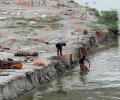
The Centre is conducting a study to assess the presence of SARS-CoV-2, or novel coronavirus, in the Ganga as corpses were found dumped in the river during the second Covid wave, and were fished out from districts in Uttar Pradesh and Bihar, officials said.

Ramesh asked the PM why river Ganga is "dirtier than before" even after spending Rs 20,000 crore on the Namami Gange project.

The city's Air Quality Index (AQI) stood at 420 at 8 am on Thursday, compared to 426 at 4 pm on Wednesday. The AQI map prepared by the Central Pollution Control Board showed clusters of red dots (indicating hazardous air quality) spread across the Indo-Gangetic plains.

A bench, headed by NGT Chairperson Justice Adarsh Kumar Goel, set up a five-member Committee to probe Thursday's gas leak incident in the chemical factory, in which 11 people were killed and 1,000 exposed, and submit a report before May 18.

The nationwide 'Janta Curfew' followed by the 21-day lockdown to combat the coronavirus outbreak have led to a significant reduction in pollution in the country, with 91 cities recording air quality in the 'good' and 'satisfactory' category on March 29, a Central Pollution Control Board report has stated. Travel restrictions and the closure of industries have helped reduce the pollution level, it said.

Delhi recorded its coldest January morning in three years with the minimum temperature dropping to 3 degrees Celsius. Cold wave conditions are expected to persist, and air quality has deteriorated to the 'very poor' category.
The top court did some tough-talking and had warned that the administration at large will be made accountable even if there is a single incident of stubble burning henceforth.

The PMK has now lent its voice to the protests against the mining of atomic minerals in Kanyakumari.

Low temperature -- Delhi recorded a minimum of 13.5 degrees Celsius on Tuesday, the season's lowest so far -- allowed accumulation of pollutants, said Mahesh Palawat, vice president (meteorology and climate change), Skymet Weather.

In a statement, Delhi Health Minister Satyendar Jain said the air pollution had reached the severe level and asked people to follow the dos and don'ts as mentioned in the advisory.

The poisonous haze has been causing significant problems for people with existing respiratory issues, according to doctors.

Delhi's air quality plummeted to alarming levels on Tuesday after 24 days, with many areas witnessing a significant spike in pollution despite the strictest measures, including a ban on construction activities and the entry of trucks into the city, coming into force.
 © 2026 Rediff.com - Advertise with us - Disclaimer - Privacy Policy - Sitemap - Feedback - About us - Terms of use - Grievances